


OB & labor medications
Dedicated content for reviewing medications used in obstetric and labor settings.
200+ pages · 14 body systems · Physical softcover
Couldn't load pickup availability
By Melissa Wynne, MSN, PNP · Full-color nursing study guide
View full details


GIVE THE DRUG NAMES A PLACE TO FIT
When every name starts to blur together, more flashcards can feel like more of the same. Build your understanding around drug classes, name patterns, and a consistent page layout.

START WITH THE PATTERNS
Prefix and suffix tables help you recognize common drug-name patterns and connect them to drug classes.
Use those connections as a starting point for studying mechanisms, uses, and safety considerations.

A LOOK AT THE ACTUAL PAGES
Full-color pages use a repeatable structure, so you can spend more time understanding the material and less time searching for it.
Start with the core concepts and what the class does.
Connect those concepts to nursing considerations.
Revisit key points and check what you remember.
GO BEYOND THE BASIC DRUG LIST
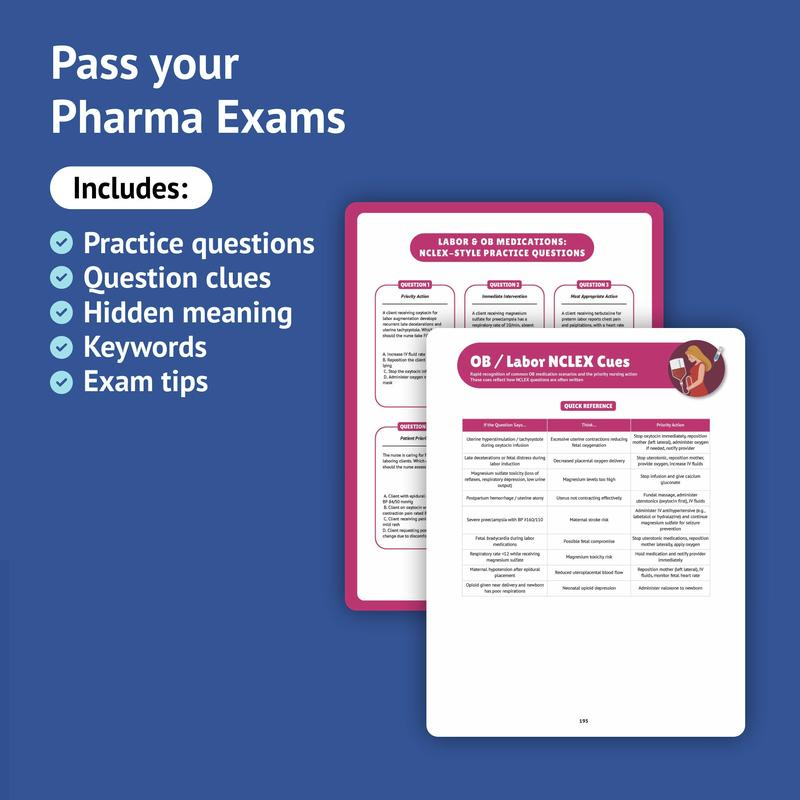
Dedicated content for reviewing medications used in obstetric and labor settings.
Explore supplement interactions as part of your pharmacology study routine.
Review antidotes, reversal agents, and the links between medications and lab values.

PUT YOUR UNDERSTANDING TO WORK
Bring your review together with NCLEX-style practice questions and rationales.
Question clues, keywords, and exam tips give you another way to work through the material and identify what needs another look.

MADE FOR YOUR NURSING STUDY ROUTINE
Return to an explanation when a drug class hasn’t clicked yet.
Review the concepts you’re encountering and prepare questions for your instructor.
Use the organized sections and practice questions to focus your review.
BEFORE YOU TURN THE FIRST PAGE
Yes. This is a full-color, softcover physical book with over 200 pages. It is not a digital download.
Nursing students studying pharmacology, preparing for clinicals, or reviewing for the NCLEX. Nurses can also use it to revisit core concepts.
The guide covers 14 body systems. Its three-zone layout brings together drug class summaries, clinical use and monitoring, and exam quick checks.
Yes. It includes NCLEX-style practice questions, rationales, question clues, and exam tips to support your review.
OB and labor medications, herbal supplement interactions, antidotes and reversal agents, and lab values connected to the drugs that affect them.
Use it to study and review concepts alongside your course materials and clinical training. Follow current institutional protocols and guidance from your clinical team for patient care.
ONE CLASS. ONE CONNECTION. ONE STEP FORWARD.
Make the next study session a little more organized—with a visual reference you can keep coming back to.
Back to the guide ↑