


Building the Ultimate Brain: 100,000 Whys
Building the Ultimate Brain: 100,000 Whys
📖 300+ pages across 6 science chapters — the body, animals, plants, space & more
🧠 Just 15 minutes (or 2 pages) a day builds sharper, more logical thinking
🎨 3,000+ vivid HD comic illustrations kids actually want to read
Couldn't load pickup availability

Building the Ultimate Brain: 100,000 Whys
"My daughter used to ask me questions I couldn't answer. Now she's the one explaining to ME why the sky is blue. Two pages a night and she's completely hooked."
Product Details
Product Details
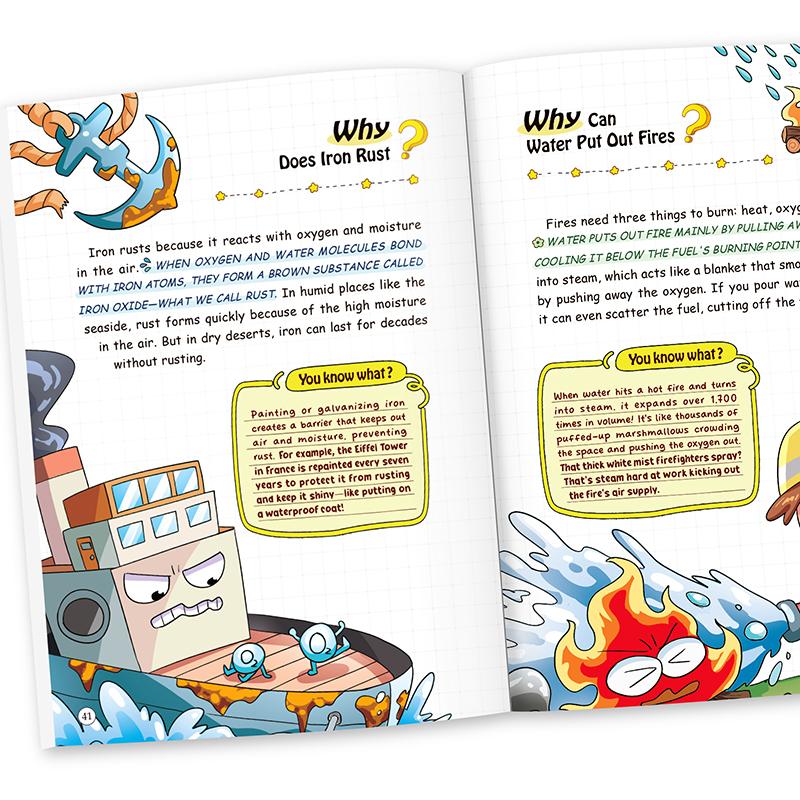
100,000 Whys: Fun and Joyful Science is a full-color science comic encyclopedia that turns real physics, biology, chemistry, and astronomy into stories kids actually want to read. Inside you'll find 300+ pages, 3,000+ large HD comic illustrations, and 100+ key science concepts spread across 6 chapters: The Body, Daily Life, Plants, Animals, The Universe & Technology, and Astronomy and Geography, covering the everyday questions kids ask on repeat, from why planes fly to why fireflies glow.
Softcover, illustrated throughout, written for kids ages 4 to 12 and designed to be read together with a parent or independently by older kids.
Shipping & Delivery
Shipping & Delivery
Orders ship within 1 to 2 business days of purchase. Delivery typically takes 7 to 12 business days depending on your location. You'll receive a tracking number by email as soon as your order ships so you can follow it the whole way.
Return & Refund Policy
Return & Refund Policy
Not the right fit for your child? You have 30 days from the date of delivery to return it for a full refund. If your book arrives damaged or defective, reach out to us first and we'll send a replacement or refund, no return shipping needed. Contact our support team to start any return.



THE EDUCATION GAP NO ONE TALKS ABOUT
Children from wealthy families already know why planes fly. Does yours?
By age 4, some kids already know why planes take off, why the sky is blue, why apples turn brown after you peel them. Not because they're smarter, but because someone handed them the answers early.
While their friends are busy watching TV or playing on a phone, kids reading 100,000 Whys are quietly building the curiosity and logical thinking that sets them apart in the classroom.

Built for kids who ask 'why' a hundred times a day
100,000 Whys turns real science, physics, biology, chemistry, astronomy, into comic stories kids actually want to read instead of paragraphs they'll skim past.
Each of the 6 chapters breaks down questions kids already ask: why don't penguins feel cold, why do fireflies glow, why do we have day and night. They see the answer play out in color before they ever have to look it up themselves.
With 300+ pages and 3,000+ illustrations, there's always another 'why' waiting to be answered.

QUICK ANSWERS ABOUT WHAT'S INSIDE
What's inside 100,000 Whys?
What's inside 100,000 Whys?
300+ pages, 3,000+ large HD comic illustrations, and 100+ key science concepts across 6 chapters: The Body, Daily Life, Plants, Animals, The Universe & Technology, and Astronomy and Geography. Real physics, biology, chemistry, and astronomy told as comic stories kids actually want to read.
Who is this for?
Who is this for?
Kids ages 4 to 12, especially the ones who ask 'why' nonstop, and parents who want to build curiosity and logical thinking early instead of relying on TV or a phone to fill the time.
Is this a textbook or a comic book?
Is this a textbook or a comic book?
A comic book. No dense chapters, no test prep, no lecturing. Every science concept is told as an illustrated story first, explanation second, so kids want to keep turning pages.
How much reading does it actually take?
How much reading does it actually take?
Just 15 minutes, or about 2 pages, a day. That's enough to work through all 6 chapters and 100+ science concepts over time, at a pace that fits into any bedtime or after-school routine.